
Patient to Founder: Why Clear Medical Communication Matters
Travelling across the world once meant months at sea in a cramped ship. Today a flight can carry you from one continent to another in a day. Moving has never been easier. Being understood, especially in a hospital, is still the hard part.
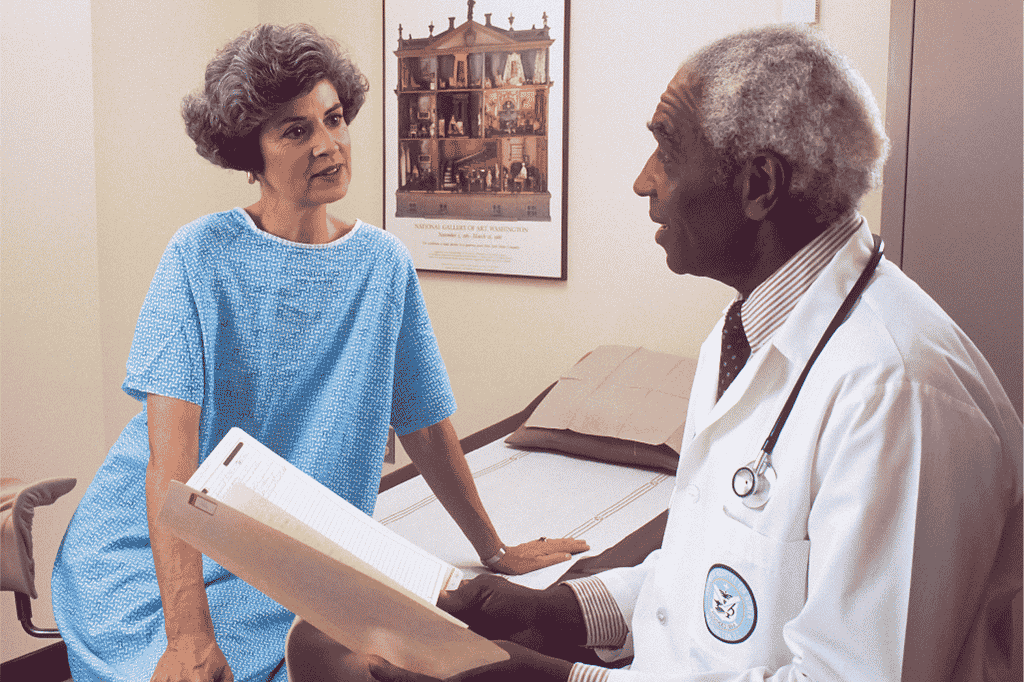
Communication failures put patients at risk
Communication failures were a factor in 30% of US malpractice cases filed between 2009 and 2013, cases that together involved 1,744 deaths (CRICO Strategies, 2015). Language barriers add to that risk: a 2025 review of 22 studies found that patients facing them are more likely to experience communication-sensitive safety events, such as medication errors (Schulson et al., 2025). We look at practical ways to close that gap in Lost in Translation: 4 Essential Tips to Overcome Language Barriers in Healthcare.
When doctors communicate clearly, patients receive better care. Our founder, Talithia Richards, learned this as a patient long before she started teaching doctors.
A complex case and a decision to make
When Talithia was around 20, she was diagnosed with keratoconus, an eye condition in which the cornea thins and bulges into a cone shape. Hers progressed quickly. In 2007 she underwent two corneal transplants, and both were rejected.
Her case was complex, and today doctors want patients involved in decisions that affect their prognosis. So Talithia read the medical research on her condition, worked through the evidence, and made the call on her own eye together with her doctors.
That experience showed her the value of well-written medical research. When a paper is clear, a patient can understand it and share a decision that shapes the rest of their life.
A near-death experience in Barcelona
Talithia moved to Barcelona in July 2014. About two months later she was admitted to hospital, where she stayed from late September to early November in what became a near-death experience.
She saw doctors every day. On their way out of her room, junior residents would tell her they wanted to take English classes with her once she was better. She still doesn't know whether they said it to give her hope of finding work in Spain, or whether it was a sincere request. Either way, she saw a chance to help the people who were saving her life.
Giving doctors their time back
Talithia wanted those doctors to spend their time on patients, treatments and everything else they need in life, not on a long struggle with English. In late 2015 she began teaching medical English online, with one aim: make learning English easier and less time-consuming for busy clinicians.
That aim still drives Medicidiom today.
How Dr. SpeakBetter puts it into practice
Talithia believes real-life situations are the best and most enjoyable way to learn a language. Medicidiom followed that principle when it built Dr.SpeakBetter, an app that helps medical professionals practise their pronunciation and clinical English.
In Dr. SpeakBetter, clinicians rehearse real situations, such as explaining type 2 diabetes to a patient with no medical background, and build their command of English medical terminology. For medical professionals who want more than a generic language app, it offers practice built around the conversations they actually have at work.
Clear communication is a skill you can practise
Talithia's story began with a patient who had to read the research to make a hard decision about her own eye. It grew with junior doctors who asked her for classes at her hospital bedside. Today Medicidiom carries that idea forward: clinical knowledge deserves clear communication, and clear communication can be practised.
Ready to practise the conversations that matter most? Try Dr. SpeakBetter and rehearse real clinical situations before they happen at work.
References
CRICO Strategies. (2015). Malpractice risks in communication failures. CRICO Strategies.
Schulson, L. B., et al. (2025). Patient safety event risk and language barriers: A scoping review. Joint Commission Journal on Quality and Patient Safety. https://doi.org/10.1016/j.jcjq.2025.02.002